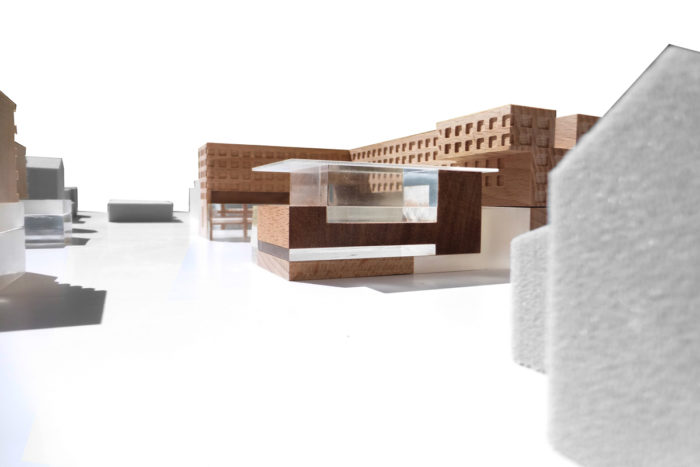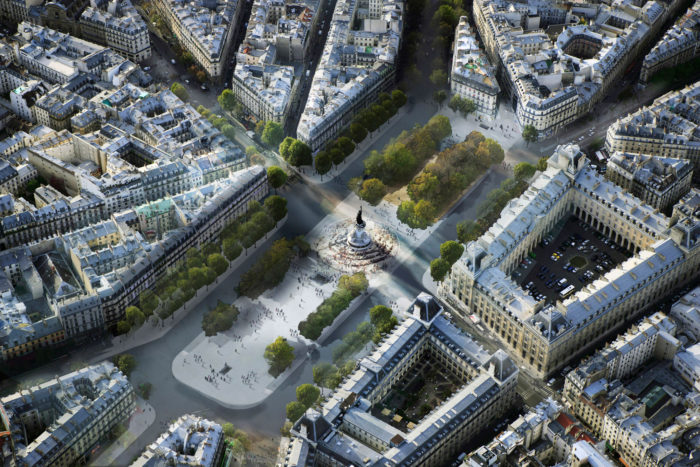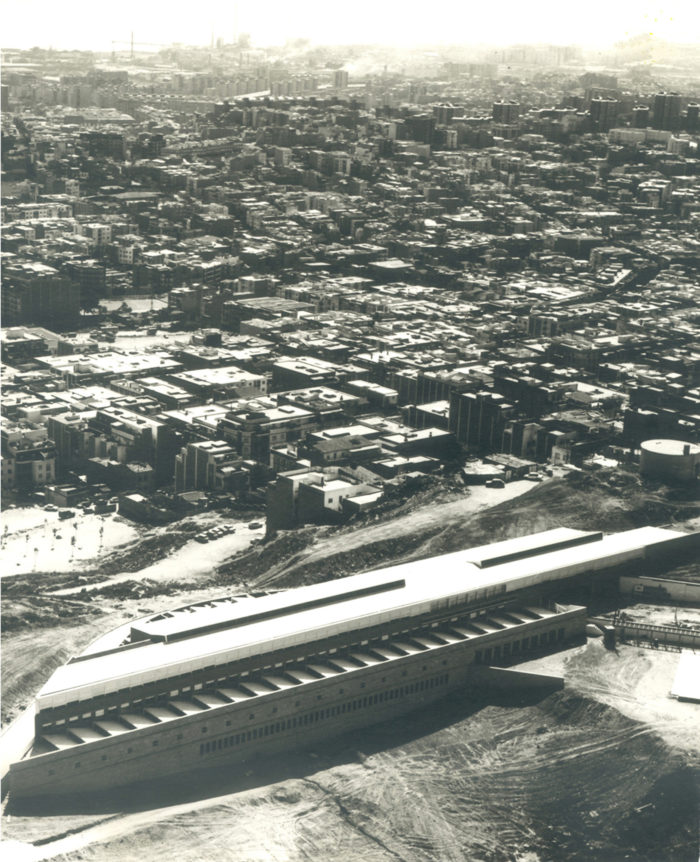
New building for the Barcelona Technical School of Industrial Engineers (ETSEIB)
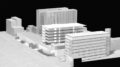
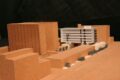
The extension of the ETSEIB entails:
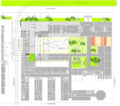
a) The continuation of the low perimeter buildings
This continuation, without being mimetic, must remain respectful of the existing architectures. It envisions more solid, masonry-like façades, set on exposed steel or concrete structures.
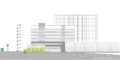
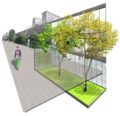
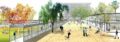
The parterre along Diagonal Avenue, a true plinth of the building, is extended by lowering it to form a landscaped sunken courtyard. This green layer is consolidated and used as a first filter for the building.
b) The new tower
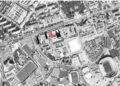
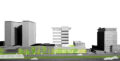
This is the real formal challenge. The tower must be understood in relation to the sequence of freestanding buildings that shape this façade along Diagonal, especially its two immediate neighbors: the tall volume of Architecture and the Engineers’ towers.
The Architecture tower (architect E. Bona)
It is a linear, stone-like block with continuous fenestration. It is one of the author’s later works, very active in postwar Barcelona, with a certain classicizing baroque character.
The most interesting aspect is the material: sandy sandstone used as a support for lintelled architectures.
The Engineers’ towers (architect Terrades)
This is a modern project, in the abstract manner of Mies van der Rohe. The towers, on their longitudinal façades, are characterized by a grid of clear vertical composition, expressing the load-bearing structure and the window mullions.
We are therefore positioned between a perforated stone mass (Architecture) and a vertical grid geometry (Engineers).
Our tower, seeking dialogue, should incorporate— in its own way—both conditions.
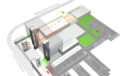
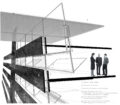
Geometrically, it is composed of horizontal bands, an option of evident functional efficiency: a solid parapet (supporting furniture and installations) combined with a glazed band.
Material: the opaque bands will be prefabricated panels finished in flamed (textured) granite in white and black; highly tectonic, yet more reflective than the sculpted mass of the Architecture building. Like it, the tower is crowned by an upper attic.
The shorter sides of the parallelepiped are formally fragmented to adjust their scale to that of the neighboring end façades, which are smaller.
Typology: Public building
Restricted competition. First Prize
Surface: 20,000 m2
Project: 2005
Location: Barcelona, Spain