Preliminary design proposal for the Montjuïc Museum Mountain
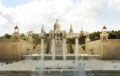
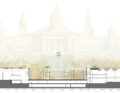
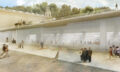
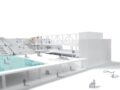
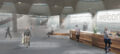
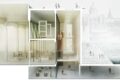
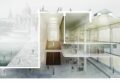
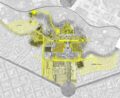
The area we are dealing with corresponds to part of the 1929 International Exposition, almost entirely planned by Josep Puig i Cadafalch and later built under his direction, with the exception of the current Museu Nacional d’Art de Catalunya (MNAC), the result of a competition won by Eugenio Cendoya and Enric Catà.
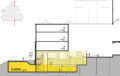
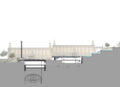
It possesses a strong internal logic, particularly topographical—how the mountain is used—clearly expressed in the terraced cross-section of the site, as well as an urban logic articulated through the monumental proposal of the north–south longitudinal axis.
This intervention had a second phase around the 1992 Barcelona Olympic Games, when the Barcelona Pavilion by Ludwig Mies van der Rohe was reconstructed, and the former Palau Nacional was modernized into a museum. The pavilions by Puig i Cadafalch were adapted—with varying degrees of success—and overall accessibility was improved.
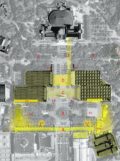
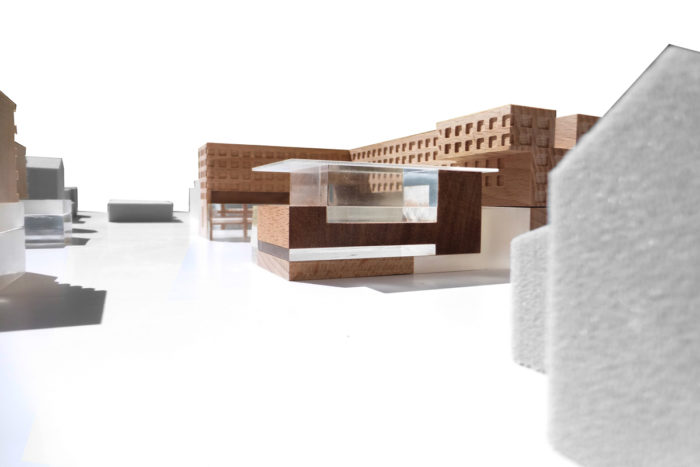
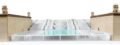
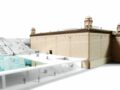
Our proposal continues these developments, aiming to consolidate the area as a new museum district for the city. It is based on centralizing access to the site around the square of the new metro station, through the construction of a lobby that articulates the former exhibition palaces to be transformed into museum spaces. This lobby concentrates access, creates a unified image, and allows, at a lower level, direct internal access to the MNAC via mechanical means. In this way, the different historical fragments are unified and the MNAC—currently highly visible yet isolated—is reconnected to the city.
Typology: Urban proposal
Project: 2014
Client: AMM (Associació Montjuïc. Muntanya dels Museus)
Location: Barcelona, Spain