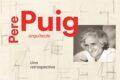
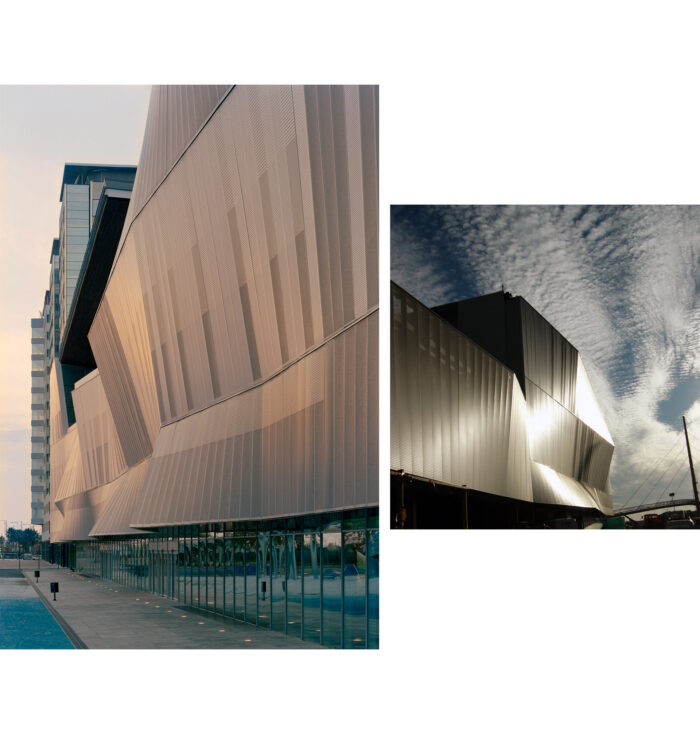
The «Museo de la Piel de Igualada y Comarcal de Anoia» presents an extensive exhibition surveying the professional career of Igualada-born architect Pere Puig.
Catalonia, with its diverse geography, history, morphology and economy, also gives rise to architectural approaches that are specific to their context while, at the same time, achieving a broader level of quality and relevance.
This is evidence of a cultural richness that is sometimes obscured by a narrow and genuinely provincial centralism.
Pere Puig’s work, largely situated in and around Igualada yet informed by a broad outlook, is an example of architecture that is both local and cosmopolitan, with an international perspective.
Pere Puig studied architecture in Barcelona and completed his education at Columbia University in New York. He encountered first-hand the work of the masters who shaped his education—particularly Louis Kahn—and throughout his career has remained closely connected to developments in the cultural, artistic and architectural worlds.
Among his body of work, I would highlight the various proposals for the Jordi Savall Auditorium, named after another internationally renowned figure from Igualada, which unfortunately was never built.
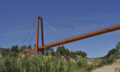
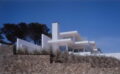
Also noteworthy are a number of local projects at different scales, including the Fàtima Viaduct (with Agustí Obiols and Guillem Baraut), the Mont-Àgora Cultural Centre, and several single-family houses—examples of comfort, a strong sense of place and modernity.
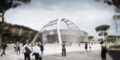
Among his international projects, I would single out the proposal for the central intervention at the Foro Italico in Rome.
His works are both contextual and abstract, with materiality playing a significant role. They explore diverse architectural discourses, conceived in response to their particular time, place and purpose.
The exhibition offers a concise overview of this significant professional career, presenting the architect’s working materials—drawings, models and other documents—alongside photographic records and a particularly compelling film featuring the architect himself. Concise and carefully structured, the film provides an insight into his intellectual and conceptual world.
Ultimately, the exhibition brings to light a significant yet relatively little-known body of work within our architectural landscape.
Josep Lluís Mateo
Dr. Architect